Dr. Paul Whitehorn (B.th, M.div, PhD)

From Shop Slang to Sheet Metal Science

cover

From Shop Slang to Sheet Metal Science

Paul Whitehorn

  • cover

    From Shop Slang to Sheet Metal Science

    Paul Whitehorn

  • cover

    Tokyo Lights

    Lunar Arcade

Translating PDR Language into Auto Body Terms

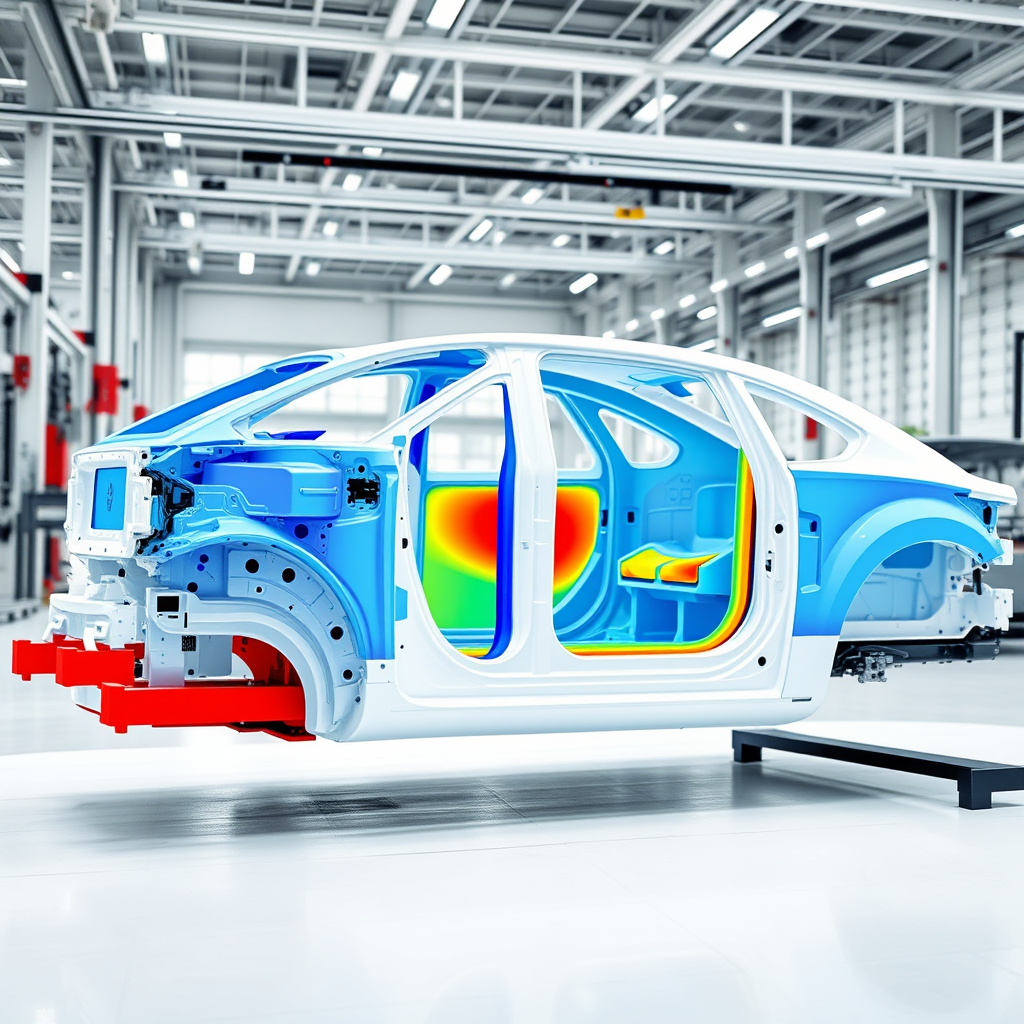
Paintless dent repair lives in two worlds. In the shop we usually talk like craftsmen. We say things like “the metal moved,” “that dent is stretched,” “tap that crown down,” or “give it a soft push.” Those phrases work fine when we are talking to each other, because everybody in the room knows what they feel like with a tool behind the panel. But the rest of the auto body world does not live in that language. Collision technicians, engineers, and the people who design and certify modern panels use a different vocabulary. They talk about elastic deformation, plastic deformation, residual stress, yield strength, springback, and strain hardening. If we want paintless dent repair to be taken seriously beside collision repair, original equipment procedures, and engineering standards, we have to learn how to translate our shop slang into their technical terms.

The good news is that we do not have to invent this language. It has already been laid out for us. Frank Sargent, in The Key to Metal Bumping, treated body and fender repair as a controlled process instead of a mystery and showed that damage strains and locked in tension must be relieved before a panel can return to its original form.¹ Adolf Steines, in Moving Metal, came from the world of traditional metal shaping and demonstrated that every blow stretches metal and that it will only move in a controlled way when you understand and respect its behavior.² Geoffrey Davies, writing for automotive engineers in Materials for Automobile Bodies, explains how yield strength, elastic and plastic deformation, springback, and strain hardening govern the way modern panels respond to impact and repair.³ These are not fringe voices. They are part of the foundation for how the broader industry thinks about metal.

Dolor dolore ex aliquip

The phrase “tap down that crown” is also more technical than it sounds. In our slang, a crown is the high ridge or ring around a low. We know from experience that if we do not relieve that crown, the low will not come up correctly. Sargent and Steines both show that these highs are not cosmetic accidents. They are the physical sign of metal that has been compressed and forced to buckle upward.¹ ² In engineering language, the crown is an area of residual compressive stress that formed when the impact drove metal toward the center. When we tap it correctly, we are relieving that residual stress and redistributing the metal so that the low can rise. At the same time, when we refine the surface so the reflection becomes smooth, we are planishing, which is a word Steines uses constantly for controlled smoothing of high spots to restore a continuous contour.² So instead of saying “tap down that crown,” we can say, “We need to relieve residual compressive stress in this crown and planish the high areas so the elastic regions can recover their original shape.” Again, same action with the tap down tool, but a very different impression to someone from the collision side.

Even our softer phrases hide real physics. When we say “give it a soft push,” we usually mean that we are easing into the metal, watching the reflection, and trying not to create a new high. That is a practical way of saying that we are trying to stay within the elastic range. We are adding very small increments of stress and letting the panel recover between pushes so that we do not create new plastic deformation. Davies would describe this as controlling the load to keep the stress below the yield point of the sheet.³ So to an adjuster, we might say, “We will lift this distortion with controlled pressure within the elastic range, carefully watching the reflection to avoid additional plastic deformation.” We have not really changed what we are doing in the panel. We have simply named it correctly.

Strain Hardening

There are also moments in a repair when we say, “The panel is getting tight.”

We mean that after many cycles of pushing and releasing, the metal feels harder under the tool and does not want to move as easily. In the language of materials, this is strain hardening. The metal has been stressed beyond yield and worked back and forth enough that its internal structure has changed. It has become stronger and less ductile, which means it will resist further shaping and may not want to return fully to the original contour. Davies treats strain hardening as a key factor in choosing materials and planning forming operations for body panels.³

Repeated Deformation

When we explain a difficult repair by saying, “The panel is beginning to show strain hardening from repeated deformation, so the last bit of distortion will require more precision and may not fully resolve without some refinish,” we are still being honest about the limits of the metal, but we do it in a way that lines up with how engineers already think.

Even the casual line “this panel has memory” has a real technical meaning. When we say that, we are noticing that the panel keeps trying to pop back to a certain shape. Provided the metal has not been fully stretched, the stamped form of the panel is stored in the elastic properties of the sheet. When we let go, the panel springs toward that form. In technical terms, this is elastic recovery or springback. Davies spends time on springback because it affects everything from die design to how panels behave in repair.³ Instead of saying that the panel “has memory,” we can say, “We are working against elastic springback that keeps trying to return the panel to its stamped form, so we are controlling both load and release to manage that recovery.”

The point in all of this is not to make our language sound fancy. It is to make it accurate.

Sargent proved that body repair could be taught and reproduced as a disciplined craft.¹ Steines showed that moving metal is an art that still obeys clear rules.² Davies wrote out those rules for the world of automotive engineering and made them part of how modern body structures are designed and judged.³ Paintless dent repair sits right on top of all three of those streams. We are already doing elastic and plastic deformation, relieving residual stress, dealing with springback, and managing strain hardening every day. When we start to name those things the way the rest of the industry names them, collision technicians recognize that we are working with the same physics, original equipment manufacturers hear language that can be written into procedures, and adjusters and customers gain confidence that there is real science under the reflection they see us watching. The work has always been there. Now it is time for the vocabulary to rise to the same level.

Footnotes

1

Frank T. Sargent

The Key to Metal Bumping, rev. ed. (Clovis, CA: Martin Sargent Publications, 1953).

2

Adolf Steines

Moving Metal: The Art of Chasing and Repousse, rev. ed. (Prescott, AZ: Blue Moon Press, 2001).

3

Geoffrey Davies

Materials for Automobile Bodies, 2nd ed. (Oxford: Elsevier, 2012).

Have Questions?

If you have questions or you would like to add to this post or have ideas about a future post, feel free to reach out to us.